Looking after the quarter
Placemaking
In October 2023, we launched our Placemaking Strategy for Baker Street and the Marylebone area, produced in partnership with The Portman Estate, setting out a vision for the future of the area – reimagining it as an exceptional place to live, work, study and visit, and developing a community-driven approach towards an active, greener, safer and more inclusive neighbourhood.
Our approach to developing this placemaking strategy was multi-faceted, centred around physical public realm improvements, but also taking into account greening & biodiversity, navigation, safety & security, culture & identity, accessibility & inclusion, and respite & wellbeing.
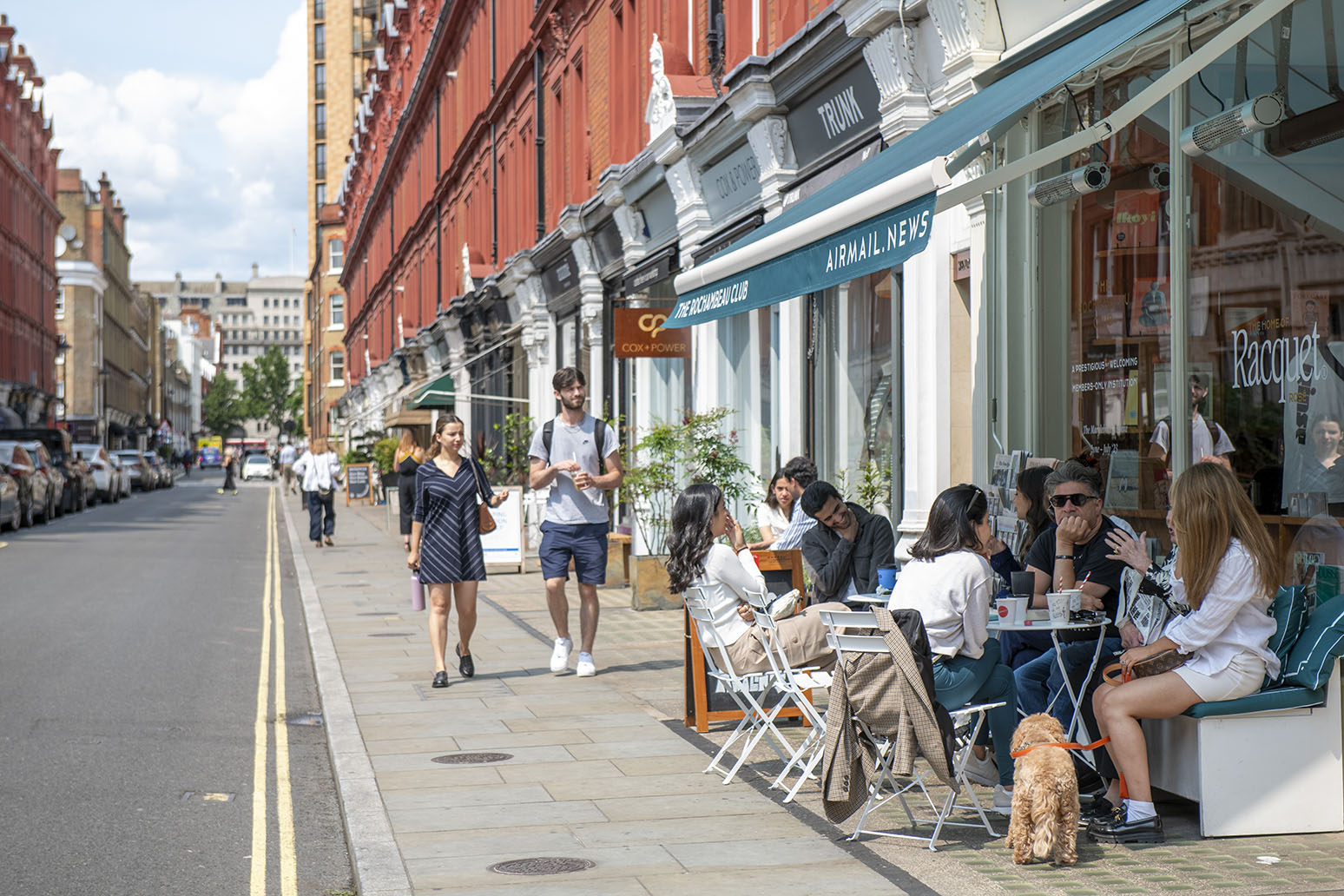
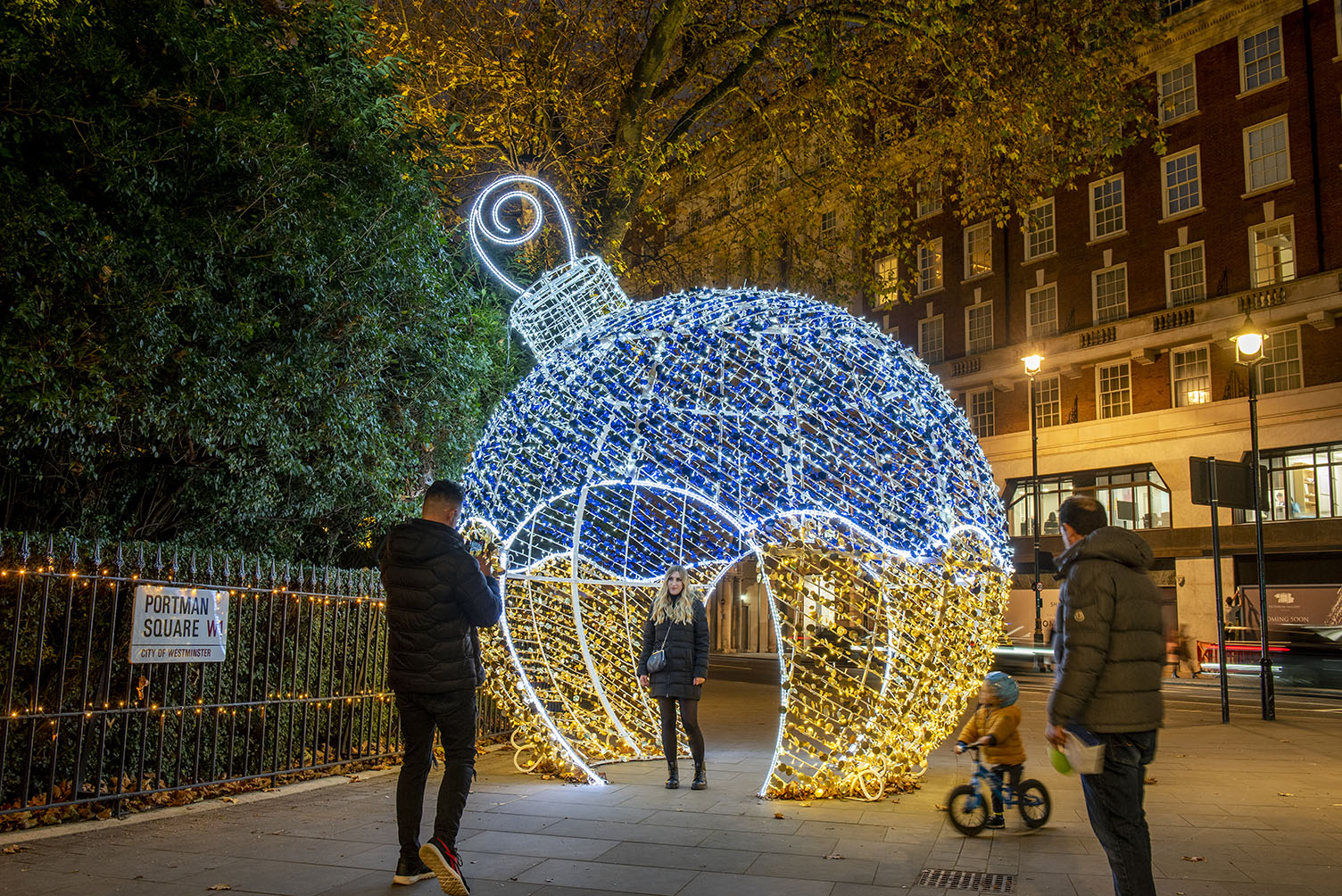
The process took into consideration the views of all of those that use the area – residents, those that work locally, business owners and stakeholders – through a range of consultation activities, in addition to evidence collated through mapping, previous studies and socio-demographic profile data. The study identifies practical strategies that will help nurture the area and respond to the needs of as many people as possible, including area-wide initiatives that encompass improvements to the physical environment alongside activities that increase activity, accessibility, and inclusivity.
Download a copy of the Placemaking Strategy For Baker Street And The Marylebone Area.
If you have any queries relating to the Placemaking Strategy or our activities, get in touch here.
AccessAble For Baker Street And Marylebone
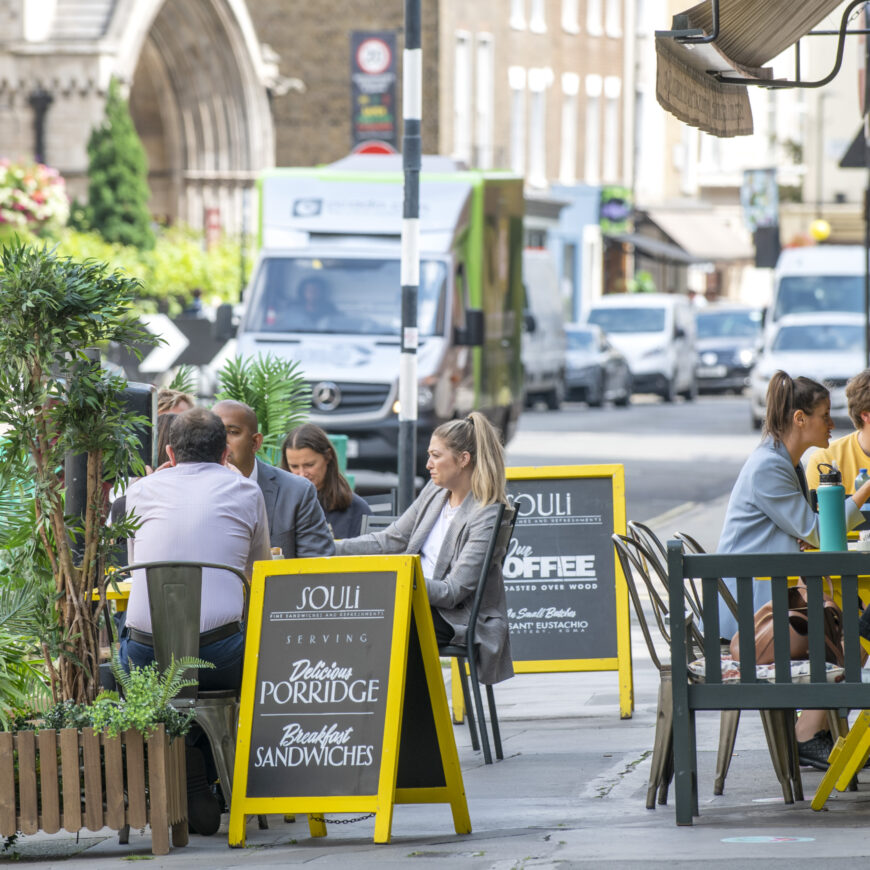
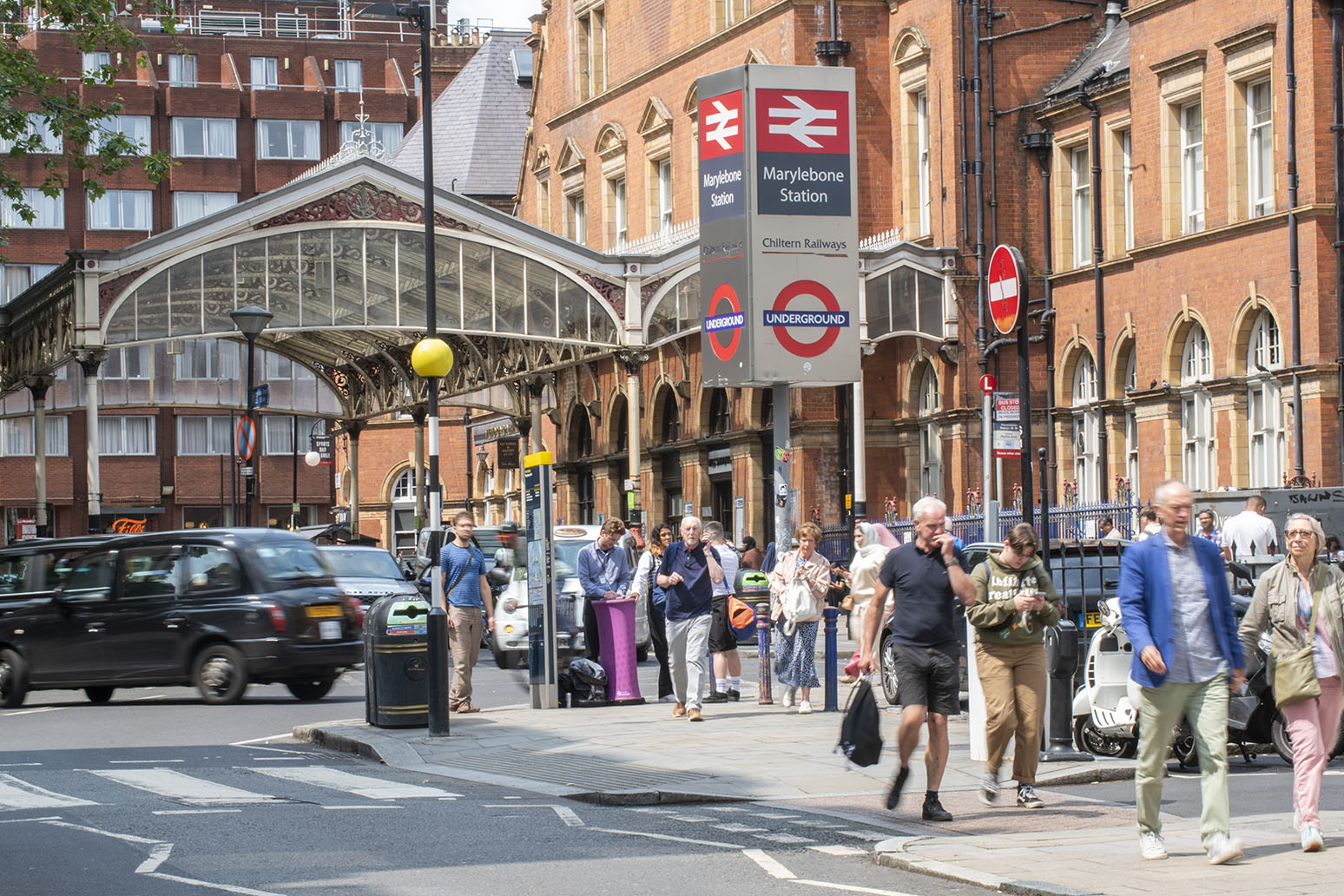
Autumn 2024 saw the launch of our area-wide AccessAble destination page for Baker Street and Marylebone Area! The AccessAble page features a wealth of information for those with accessibility needs, from arriving here via Marylebone and Baker Street stations, to exploring the local attractions, public spaces and businesses. The project, developed in partnership with The Portman Estate, and which aims to make the area more welcoming to those with disabilities, has involved surveys taken over recent weeks of many of the pedestrian routes and of participating businesses, with more on the way!
Visit the Baker Street and Marylebone Area AccessAble page here.
Marylebone And Baker Street Stations Green Link
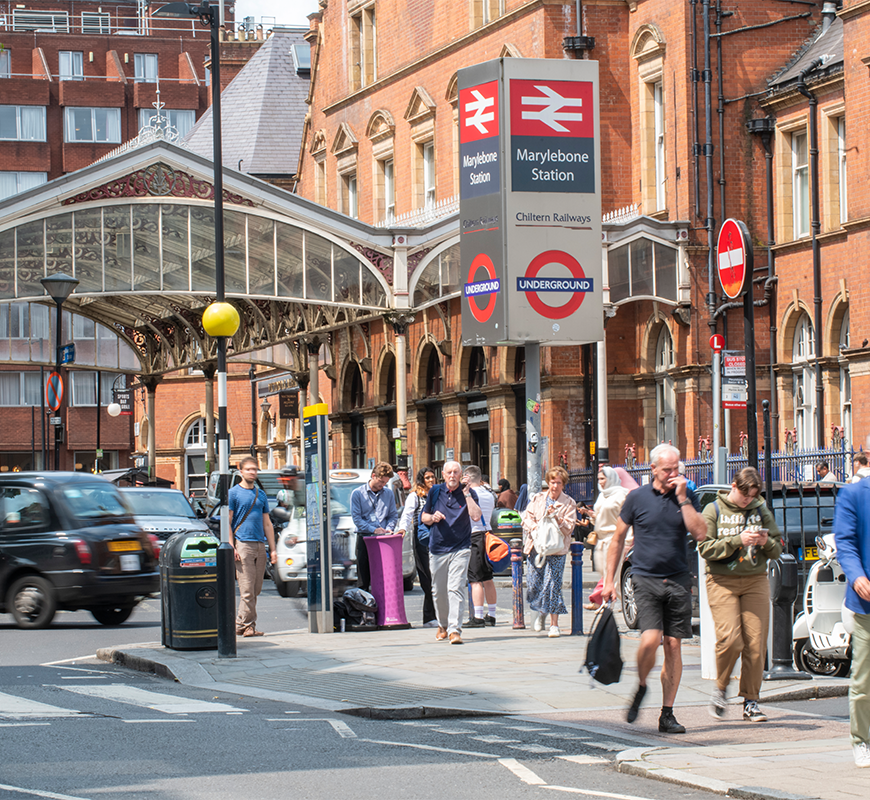
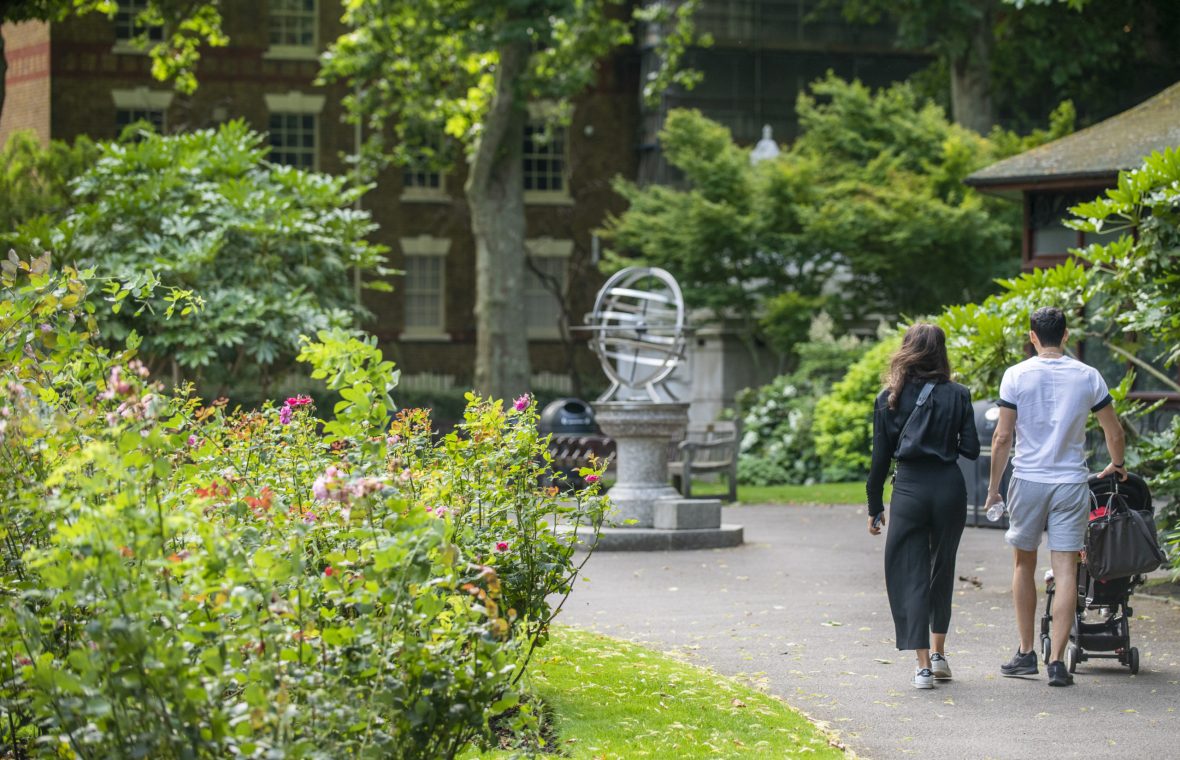
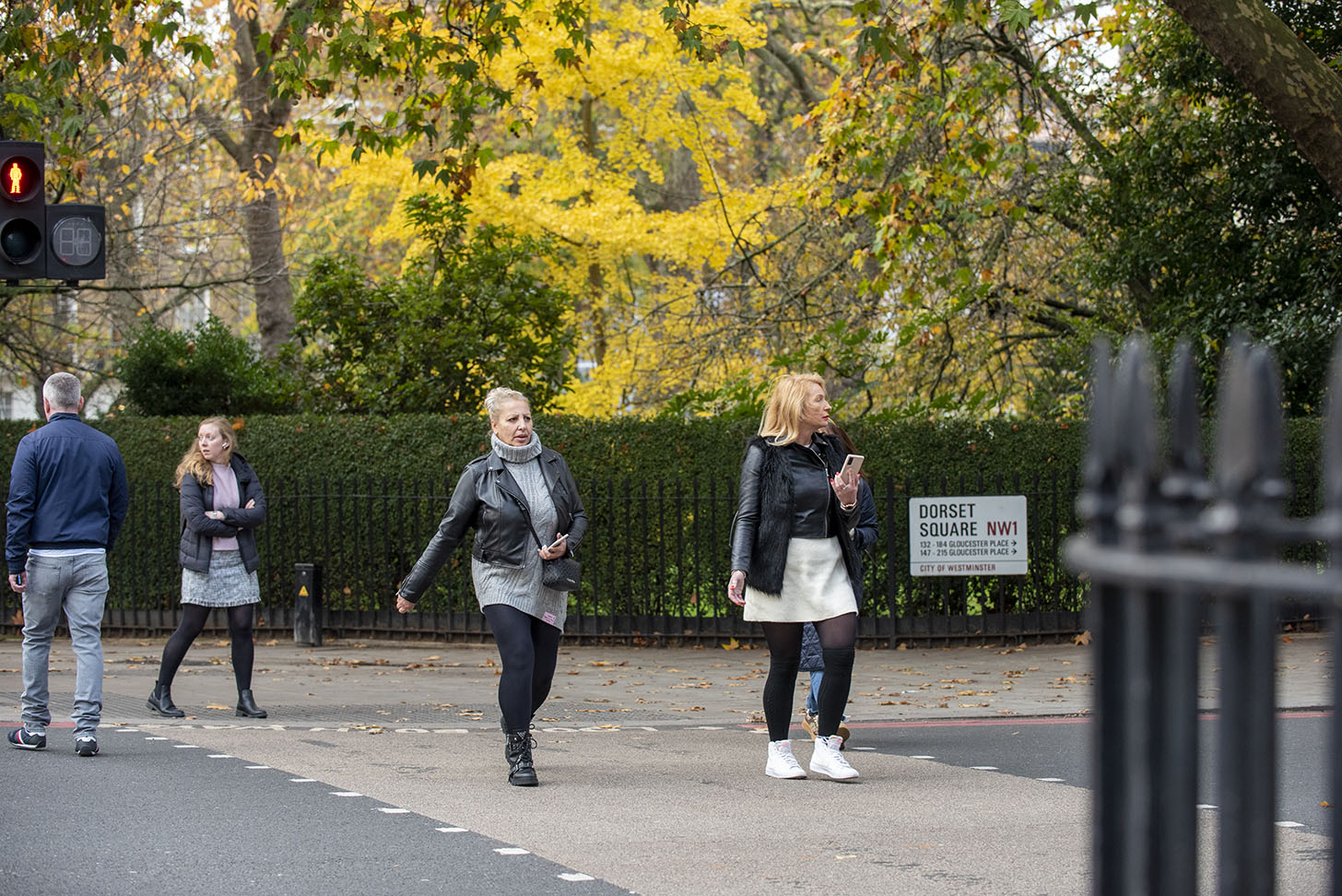
In July 2023, we were delighted to receive Greening Westminster Funding for our project to enhance the greening around and along the walking route between Marylebone and Baker Street stations, via Dorset Square and Melcombe Street. The project aims to create a more pleasant environment, increasing biodiversity whilst improving air quality – importantly accompanied by a full management, maintenance and monitoring plan. The funding enables us to help realise our ambitions for the benefit of everyone who uses this important route, identified as a priority as part of our Placemaking Strategy research.
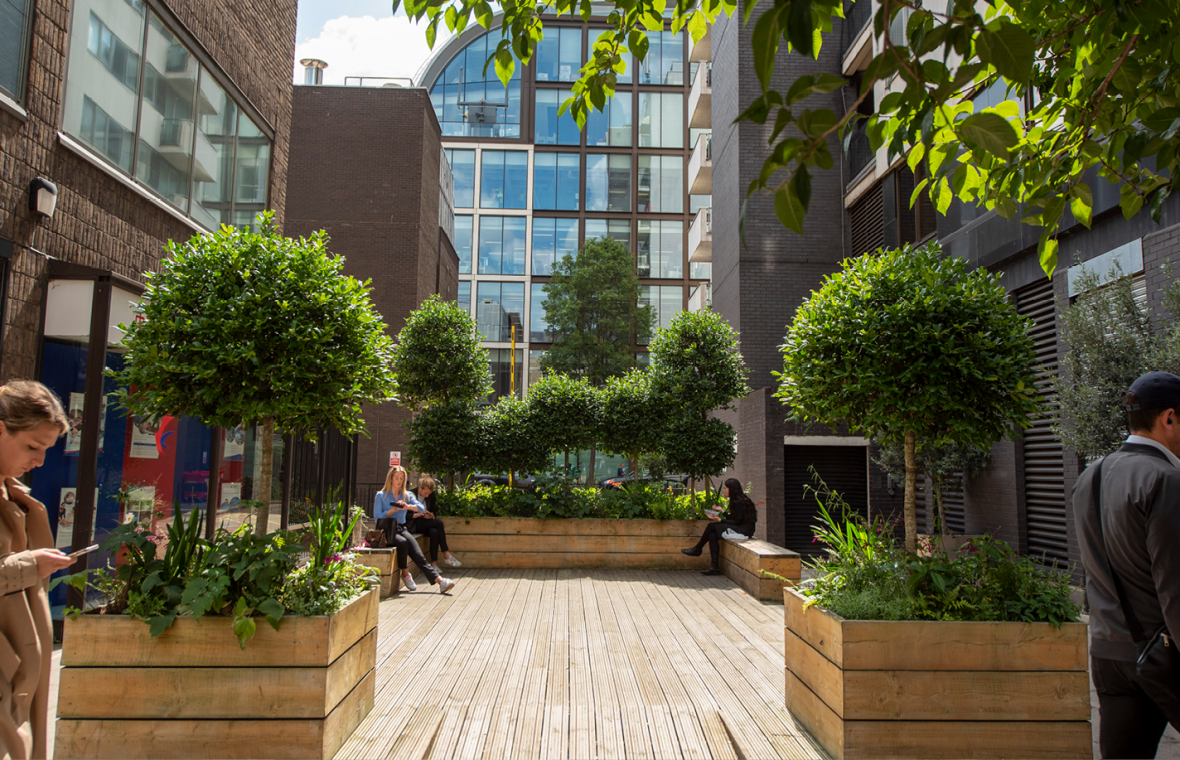
Planters were installed in November 2024 in partnership with Berkeley Court, bringing new greening to the area to improve the local environment. Plants were carefully chosen to increase biodiversity – find out more about the plants here.
Marylebone Station: Harewood Avenue Exit
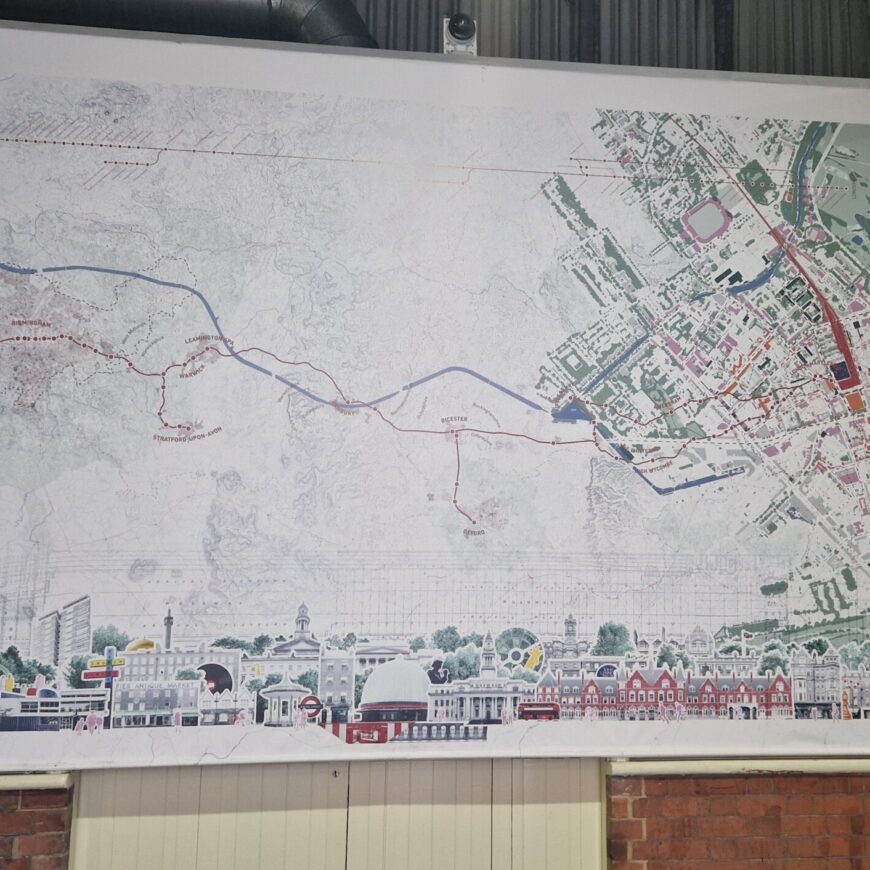
In March 2024, we completed our installation at Marylebone Station. In recognition of Marylebone Station’s 125th anniversary we took over the Harewood Avenue entrance/exit space and decluttered and cleaned up the space. We created and installed a large-scale map display and posters celebrating the history of the station, its links up the Chiltern lines and its role in the local community. We received funding from Chiltern Railways’ Community Investment Fund and worked closely with the Chiltern Railways team to deliver this project.
Baker Street Station Activation
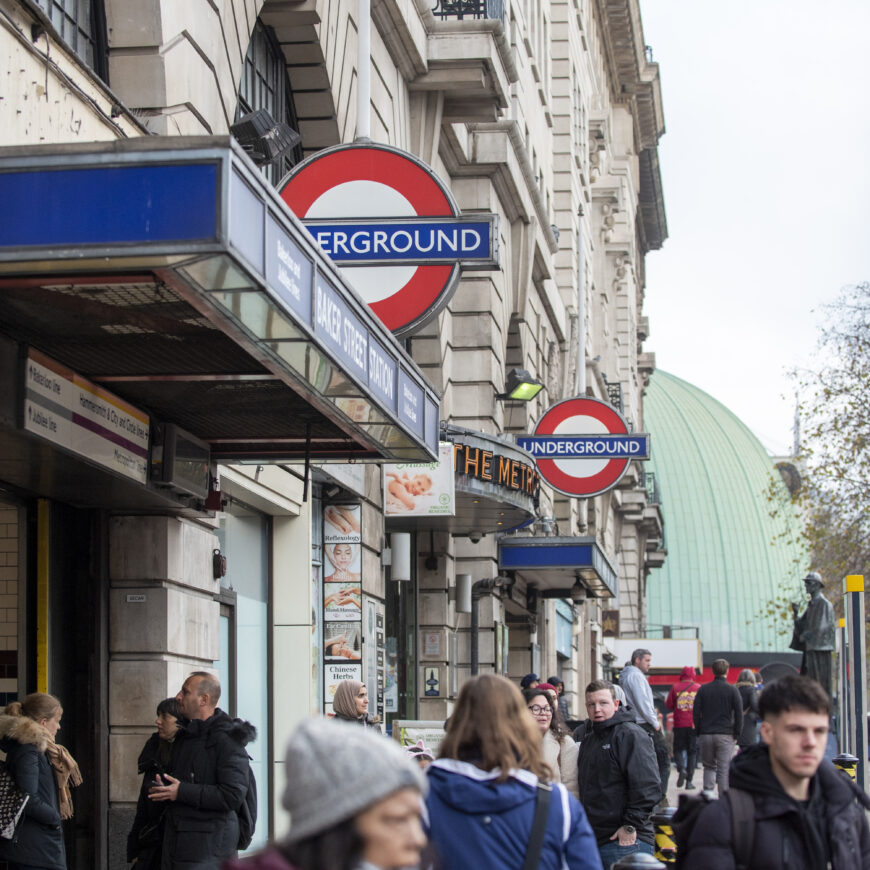
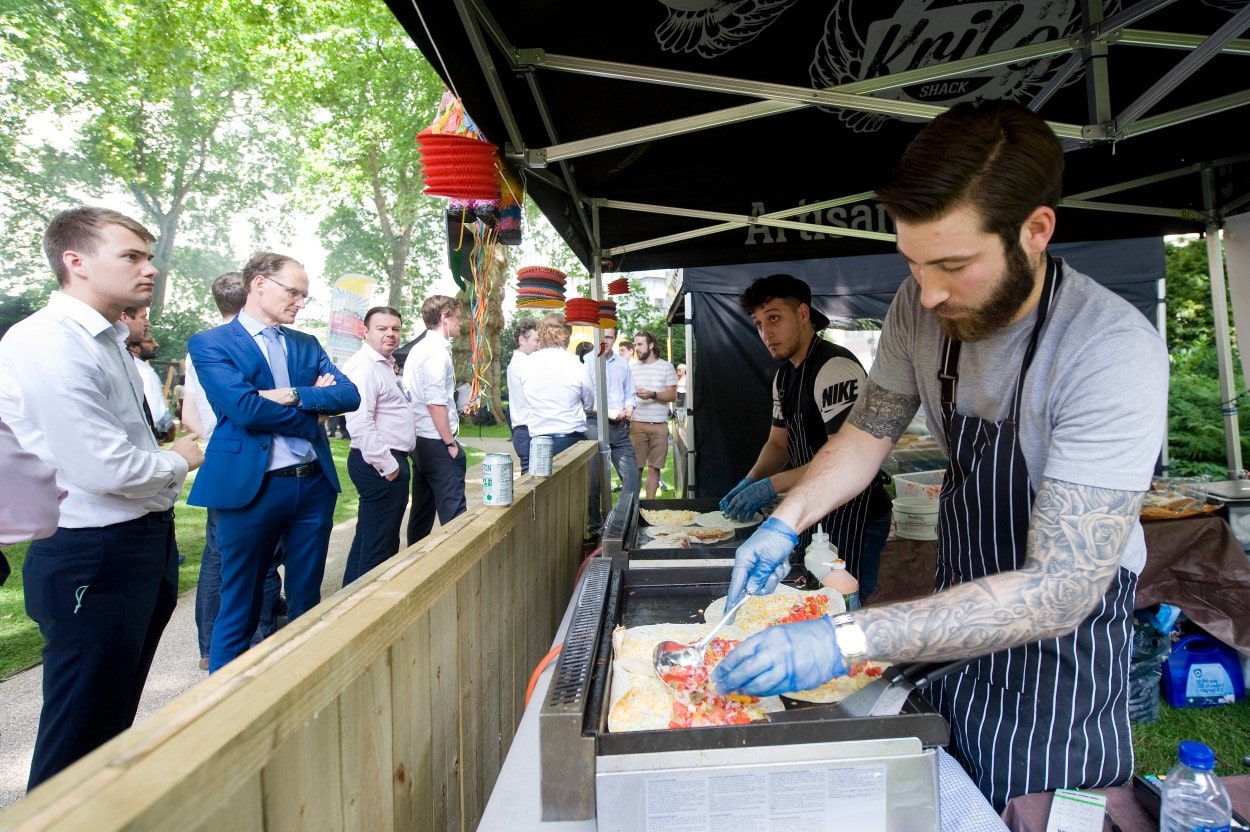
We undertook initial improvements and a trial activation in the space outside Baker Street station during the summer of 2024, working closely with TfL. Deep cleaning took place prior to the launch of a trial weekly food market with outdoor seating, improving the first impression to visitors and commuters to the area. The trial ended in November 24 as discussions take place about the future of the space.
Marylebone Road - Disused Toilet Blocks
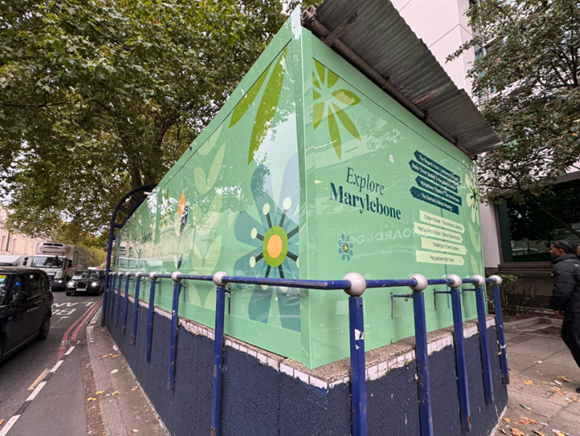
The public toilets on Marylebone Road had been closed for many years and had unfortunately become a hotspot for antisocial behaviour. We liaised with the Council to arrange their full closure and boarding-up of the site, however the blank hoardings became a target for graffiti.
Working closely with, and with funding from, the University of Westminster, Westminster City Council Property & Estates Department, and Councillor Ward funding from Marylebone and Regent’s Park, we were able to transform the sites with a coordinated decorative scheme. New di-bond panels were installed around the blocks, each treated with an anti-graffiti coating to ensure that any future markings can be easily wiped clean.
The designs celebrate the local area, featuring signposts to nearby landmarks, transport hubs, and popular destinations, helping to promote Marylebone’s rich character while enhancing the streetscape.
The Wonderpass
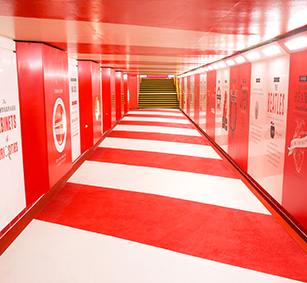
We were delighted to open the transformed Wonderpass in 2016. Previously a much neglected, dank and dingy Marylebone Road Subway, the vibrant and welcoming walkway is a safe alternative to those wishing to cross Marylebone Road. The Wonderpass is also a cultural crossing that’s a wonderful celebration of our area’s history and attractions. More than just a lick of paint, the project involved a major structural upgrade, improving and renewing drainage, electrics and lighting, stairwells, floors and handrails. It represents a true collaboration of ourselves, TfL and Westminster City Council ward councillors, with production from Sing London, and the design features work from the Wallace Collection, Madame Tussauds and Regent’s Park Open Air Theatre.
Baker Street Two Way Project
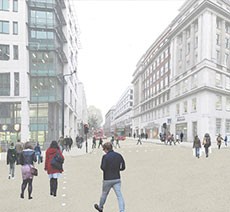
September 2019 saw the completion of this major public realm project, led by Westminster City Council and TfL with support from Baker Street Quarter and The Portman Estate, to change Baker Street and Gloucester Place from one-way to two-way. The scheme’s objectives were to improve air quality, reduce vehicle speeds, provide greater opportunity to walk and cycle, and make the shared public space a more enjoyable place to be.
Wider pavements, additional and better crossings, more trees and new surfacing have all contributed to a much-improved environment for those residents and workers that use the area regularly as well as for visitors and those travelling through. A detailed monitoring strategy, comparing data pre-works in July 2017 and after completion in October 2019, alongside repeated monitoring at several key junctions and locations, observed an increase in both pedestrian activity and cycle use as well as a decrease in vehicle speeds by approximately 25-30%. Further information on the Baker Street Two Way and the detailed monitoring report can be found here.